

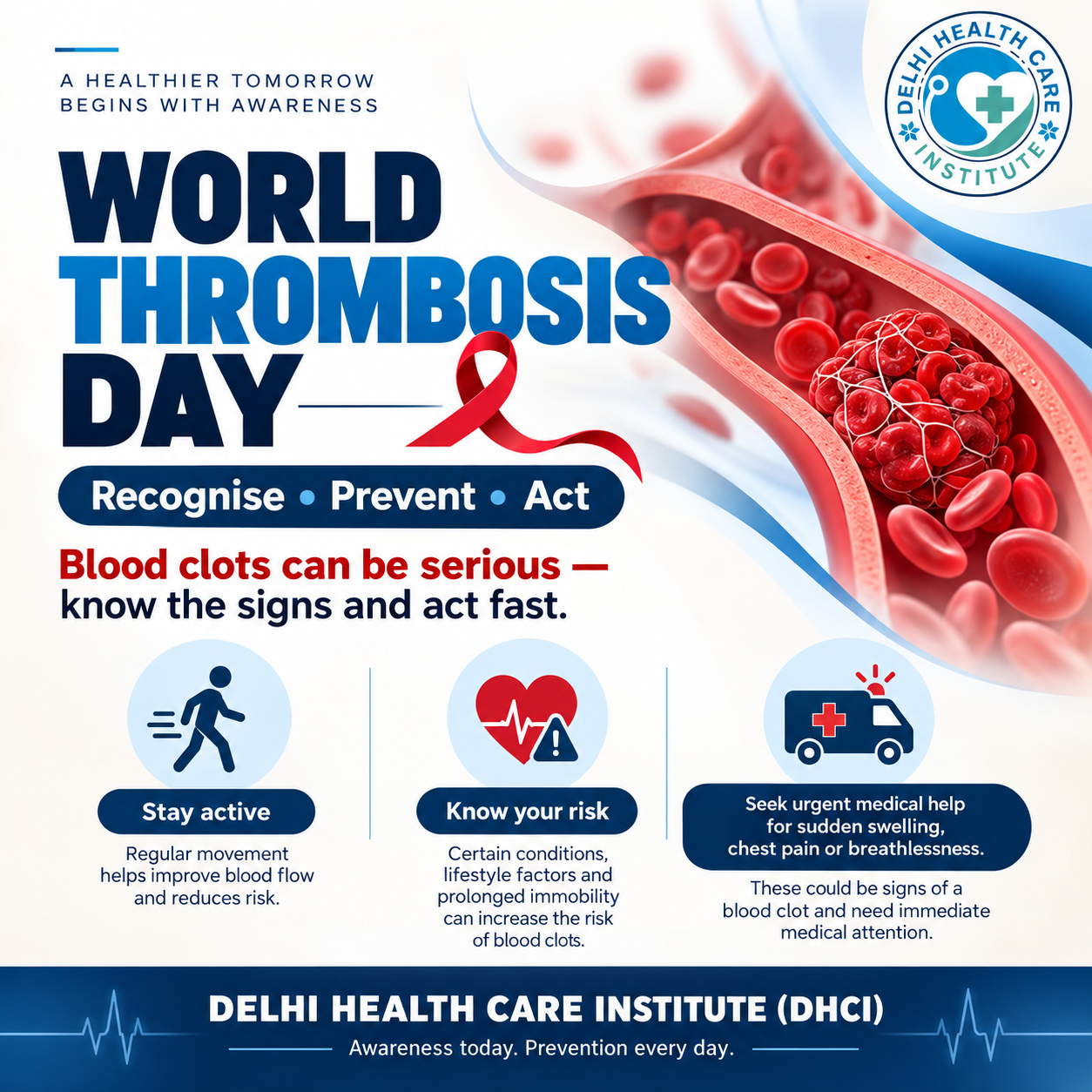
WORLD THROMBOSIS DAY
World Thrombosis Day: Raise Awareness, Recognise the Risks, Prevent Blood Clots
Delhi Health Care Institute (DHCI) | Health Awareness
World Thrombosis Day is observed every year on 13 October to raise awareness about thrombosis, a serious medical condition that occurs when a blood clot forms inside a blood vessel. The day highlights the importance of understanding the risk factors, recognising warning signs, and taking preventive measures to protect our health.
At Delhi Health Care Institute (DHCI), Nirman Vihar, New Delhi, we believe that healthcare awareness and education play an important role in building a healthier society.
What Is Thrombosis?
Thrombosis is the formation of a blood clot inside a blood vessel. This clot can partially or completely block blood flow, potentially leading to serious complications.
Two common types of thrombosis are:
Deep Vein Thrombosis (DVT): A blood clot that forms in a deep vein, usually in the leg.
Pulmonary Embolism (PE): A potentially life-threatening condition that occurs when a clot travels to the lungs and blocks blood flow.
Thrombosis can affect people of different ages, and understanding its warning signs is essential for timely medical care.
Common Signs and Symptoms of Blood Clots
The symptoms depend on where the clot forms. Possible warning signs include:
Swelling in one leg or arm
Pain or tenderness, particularly in the leg
Warmth or redness in the affected area
Sudden shortness of breath
Chest pain, especially when breathing deeply
Rapid heartbeat or fainting
Important: Sudden breathlessness, chest pain, fainting, or other symptoms suggestive of a pulmonary embolism require immediate emergency medical attention. Do not ignore these warning signs or attempt to self-diagnose.
Who May Be at Risk?
Certain conditions and lifestyle factors can increase the risk of thrombosis, including:
Prolonged sitting or immobility
Recent surgery or hospitalisation
Previous blood clots or a family history of thrombosis
Pregnancy and the period after childbirth
Certain medical conditions and cancer
Smoking, obesity, and increasing age
Some hormone-based medicines
Having one or more risk factors does not necessarily mean that a person will develop a blood clot. A healthcare professional can help assess individual risk and recommend appropriate preventive measures.
How Can Blood Clots Be Prevented?
Simple preventive steps can help reduce the risk of blood clots, particularly when combined with medical advice where needed.
1. Stay physically active: Regular movement and exercise support healthy blood circulation.
2. Avoid prolonged immobility: During long journeys or extended periods of sitting, move your legs and take regular walking breaks when possible.
3. Follow medical advice after surgery: If you are admitted to a hospital or recovering from an operation, follow your healthcare professional's recommendations for movement and clot prevention.
4. Maintain healthy lifestyle habits: Avoid smoking, stay physically active, and work towards a healthy weight.
5. Understand your personal risk: Discuss your medical history and risk factors with a qualified healthcare professional.
6. Take prescribed medication correctly: If blood-thinning medication has been prescribed, take it exactly as directed. Do not start or stop it without medical guidance.
The Role of Healthcare Education
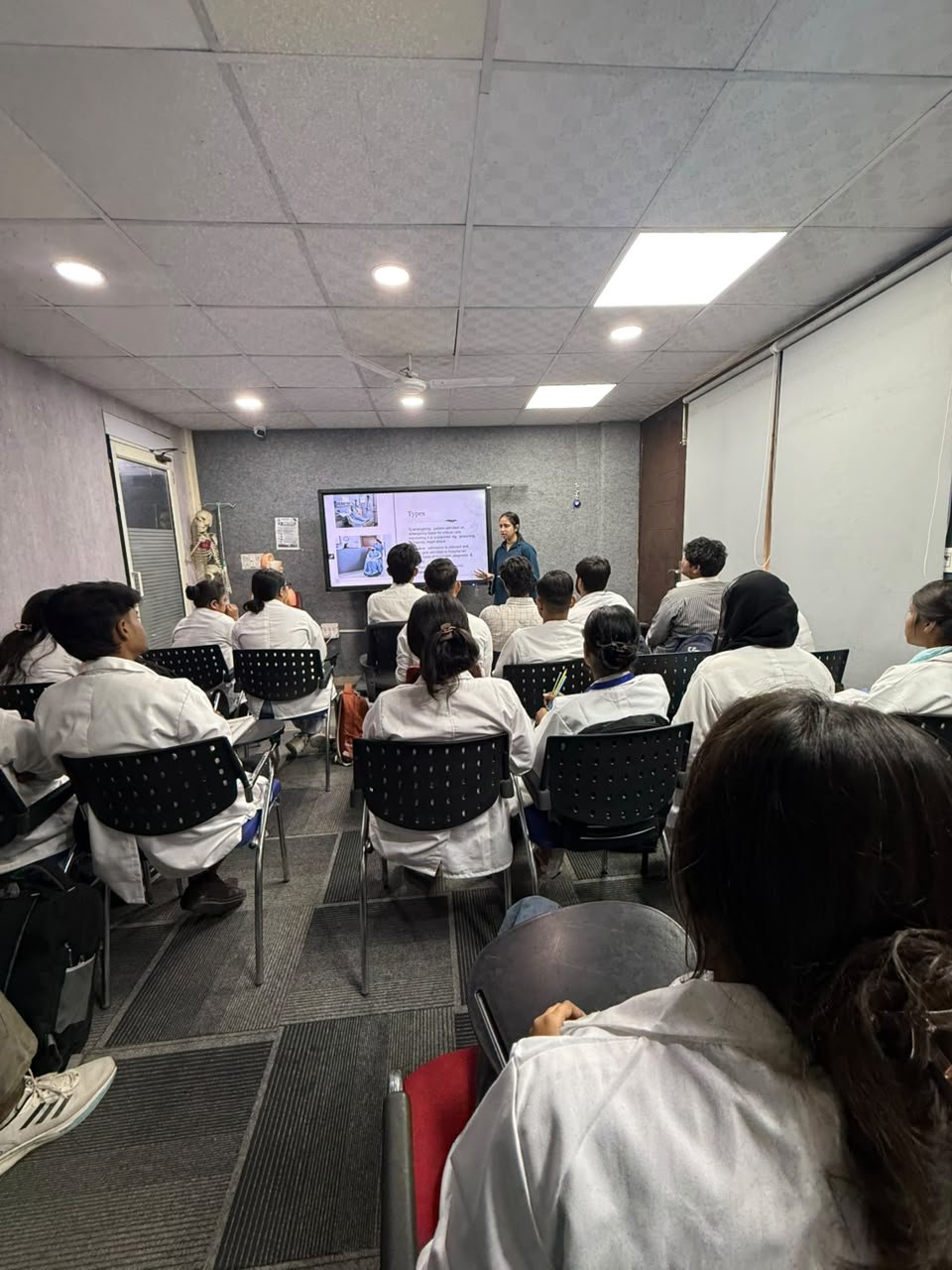
Awareness is an important step in preventing complications associated with thrombosis. Healthcare professionals, nursing students, and paramedical professionals can help educate communities about blood clot risks, early warning signs, and the importance of timely medical attention.
At Delhi Health Care Institute (DHCI), we encourage health awareness and healthcare education to support a more informed and health-conscious community.
This World Thrombosis Day, Take Action
This World Thrombosis Day, remember three important words: Recognise. Prevent. Act.
Learn the warning signs, understand your risk factors, stay active, and seek medical attention when symptoms arise. Early recognition and appropriate treatment can make a critical difference.
Delhi Health Care Institute (DHCI)
Nirman Vihar, New Delhi
Disclaimer: This article is intended for general health awareness and educational purposes only. It does not replace professional medical advice, diagnosis, or treatment.
Related posts