


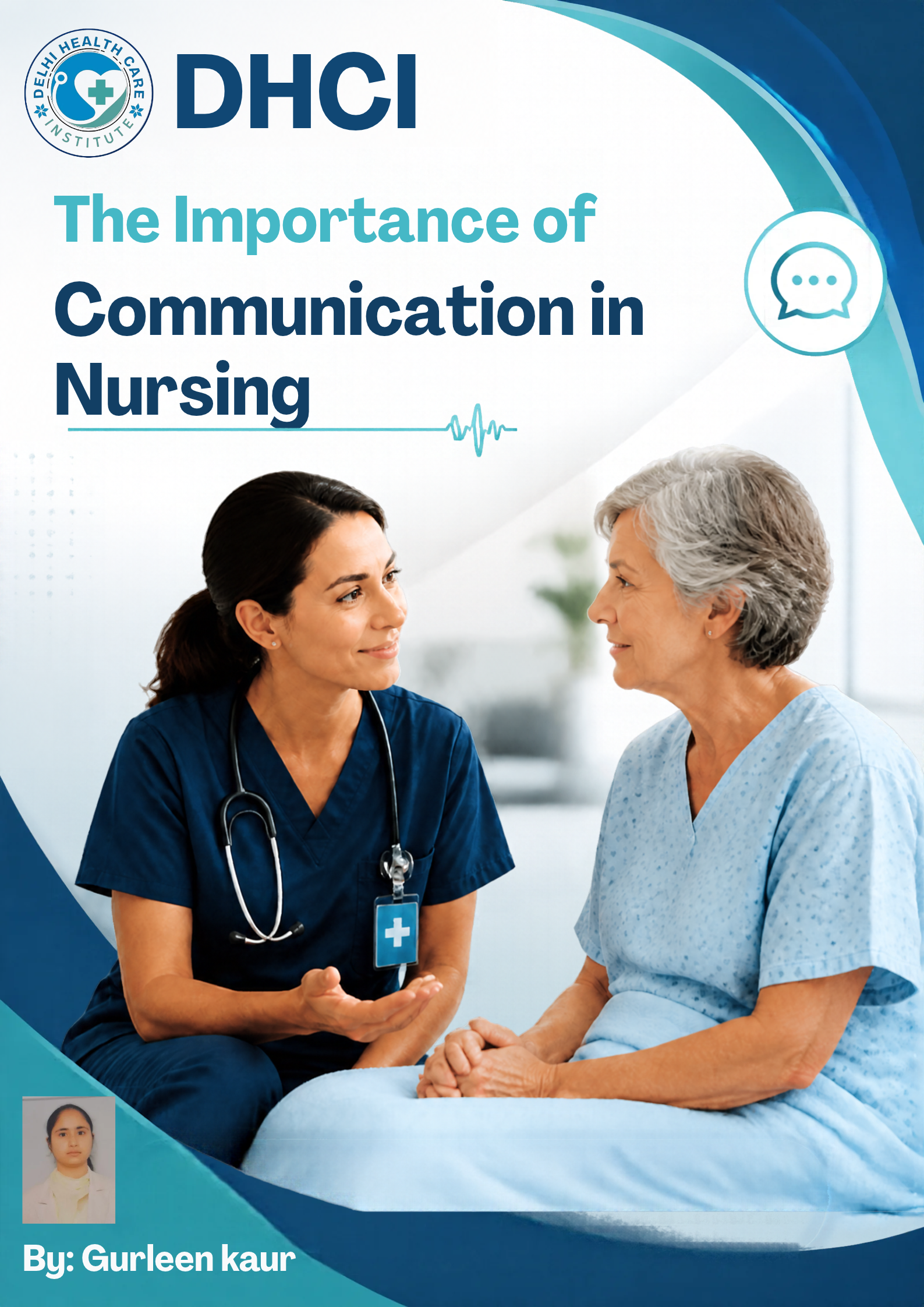
IMPORTANCE OF COMMUNICATION SKILLS IN NURSING
IMPORTANCE OF COMMUNICATION SKILLS IN NURSING
The Heart of Quality Patient Care
1. INTRODUCTION
What is nursing? If we ask someone this question, the answer is usually the same: nursing is all about administering medications, checking vital signs, and performing medical procedures.
However, in my opinion, there is one more important aspect of nursing that is often overlooked, and that is communication skills.
Without proper interaction with patients, nurses cannot truly understand what patients are going through, how they feel, or what they need.
A Personal Experience from My Nursing Journey
I would like to share a personal incident from my working days as a Registered Nurse at Rajendra Hospital.
As usual, I reported for my morning shift in the medicine ward. All the other staff members were busy checking vital signs, administering medications, and maintaining patient records.
I noticed an elderly patient who had been admitted that very day. It was his first hospital visit, and I observed that he was alone and looked quite confused.
I approached him politely and asked, "Namaste Uncle, what happened?"
Initially, he hesitated to speak. However, I continued the conversation and reassured him that he could openly share what he was feeling.
Gradually, he opened up and explained that it was his first time visiting a hospital. He did not know much about the hospital environment, had come alone, and was also worried because he did not understand his medical condition.
With his permission, I checked his medical file and found that he had been diagnosed with acute diarrhoea.
I calmly explained his condition and reassured him that it could be managed with proper treatment and care.
After listening to me, he appeared much more relaxed. His concerns were addressed, and he thanked me for taking the time to speak with him.
Honestly, I felt very happy that I could help him.
This incident has always remained special to me because it helped me understand the true importance of communication in nursing practice. It made me realise that sometimes, a few kind words and a little time can make a significant difference in a patient's experience.
2. WHY IS COMMUNICATION IMPORTANT IN NURSING?
Reflecting on this experience made me realise that effective communication is an essential part of nursing practice.
Communication is not limited to talking with patients. It also involves listening, understanding, explaining, and responding to their needs.
Some important benefits of effective communication include:
Builds Trust: When patients feel heard and respected, they become more comfortable and confident in their healthcare providers.
Reduces Anxiety: Clear explanations and reassurance help patients feel relaxed and safe.
Improves Patient Care: Communication helps nurses understand patients' concerns, symptoms, and individual needs.
Promotes Teamwork: It helps healthcare professionals coordinate their work and share important information.
Prevents Misunderstandings: Proper communication reduces the risk of errors and confusion during patient care.
3. DIFFERENT TYPES OF COMMUNICATION IN NURSING
There is no single way to communicate with every patient because each patient has different needs and abilities.
Communication can take place in several ways:
3.1 VERBAL COMMUNICATION
Verbal communication means interacting with patients through spoken words.
It is not just about talking; it also involves explaining health conditions, medical procedures, recovery instructions, answering patient questions, and providing health education.
Important Points to Remember:
Nurses should speak clearly and politely.
Use simple language instead of complicated medical terms.
Explain procedures and treatments properly.
Always check whether the patient has understood the information.
3.2 NON-VERBAL COMMUNICATION
Non-verbal communication means expressing feelings and care without using spoken words.
Nurses sometimes deal with vulnerable patients who may find it difficult to express themselves. In such situations, gestures, facial expressions, active listening, and eye contact play an important role.
Important Points to Remember:
Maintain appropriate eye contact.
Use attentive and welcoming body language.
Keep a comfortable posture.
Show patience through facial expressions and gestures.
Make patients feel that they are being heard and understood.
3.3 WRITTEN COMMUNICATION
Written communication involves sharing information through written notes, reports, medical records, and documentation.
It also includes maintaining accurate records of procedures, medications, patient conditions, and nursing handovers.
This helps communicate important information among patients, family members, nurses, and other healthcare professionals.
Important Points to Remember:
Maintain clear and accurate records.
Complete documentation on time.
Ensure that all important information is recorded.
Maintain patient confidentiality.
3.4 VISUAL COMMUNICATION
Visual communication involves using pictures, charts, diagrams, posters, and other visual materials to explain healthcare-related information.
It is especially helpful for patients who have difficulty speaking, expressing their feelings, or understanding spoken explanations.
Important Points to Remember:
Use simple and clear images.
Keep charts and diagrams easy to understand.
Use attractive and meaningful visual materials.
Make sure the information is understandable for patients.
4. THE ROLE OF COMMUNICATION IN PATIENT SAFETY
As I explained through my personal experience, communication plays an important role in ensuring patient safety.
Clear and timely communication helps nurses share important information with doctors, colleagues, patients, and their family members.
For example, if a nurse notices a sudden change in a patient's condition during treatment or any medical procedure, reporting it immediately to the concerned healthcare professional can help them decide what further care or treatment is required.
Therefore, effective communication helps in:
Early identification of patient problems.
Timely reporting of changes in patient conditions.
Reducing misunderstandings and medical errors.
Improving coordination among healthcare professionals.
Providing safe and effective patient care.
5. HOW CAN NURSING STUDENTS AND NURSES DEVELOP BETTER COMMUNICATION SKILLS?
As we have often heard, practice makes a person perfect.
The same applies to communication skills. They can be improved through regular practice and everyday interactions.
Nursing students can develop confidence in classrooms, during clinical postings, and through their daily interactions with patients and healthcare professionals.
According to me, some important habits can help improve communication skills:
Listen Actively: Listen carefully and allow patients enough time to express their feelings and concerns.
Speak Politely and Confidently: Maintain a calm, respectful, and confident tone while communicating.
Use Simple Language: Avoid complicated medical terms and explain information in words that patients can easily understand.
Show Empathy and Respect: Respect patients' values, traditions, beliefs, choices, and privacy.
Maintain Appropriate Eye Contact: Be aware of your body language and posture while interacting with patients.
Confirm Important Information: Make sure that patients have understood the instructions and information provided to them.
Maintain Accurate Documentation: Record important procedures and patient-related information correctly and on time.
Maintain Confidentiality: Respect patients' privacy and never share their personal medical information unnecessarily.
6. CONCLUSION
In my opinion, nursing is not only about administering medications, checking vital signs, and performing medical procedures. Another equally important aspect of nursing is effective communication.
Without proper communication, we cannot understand what a patient is truly experiencing or what kind of care they need.
Clinical knowledge is essential, but nurses must also know how to listen, explain, reassure, and work effectively with others.
Effective communication builds trust, supports teamwork, improves patient safety, and contributes to compassionate care.
A patient may not remember everything we do for them, but they will always remember how we treated them and how we made them feel.
MY FINAL THOUGHT
"Good nursing is not only about what we do for patients, but also about how we treat them, listen to them, talk with them, and make them feel valued."
PRESENTED BY
MS. GURLEEN
Nursing Faculty
Delhi Healthcare Institute (DHCI)




Related posts